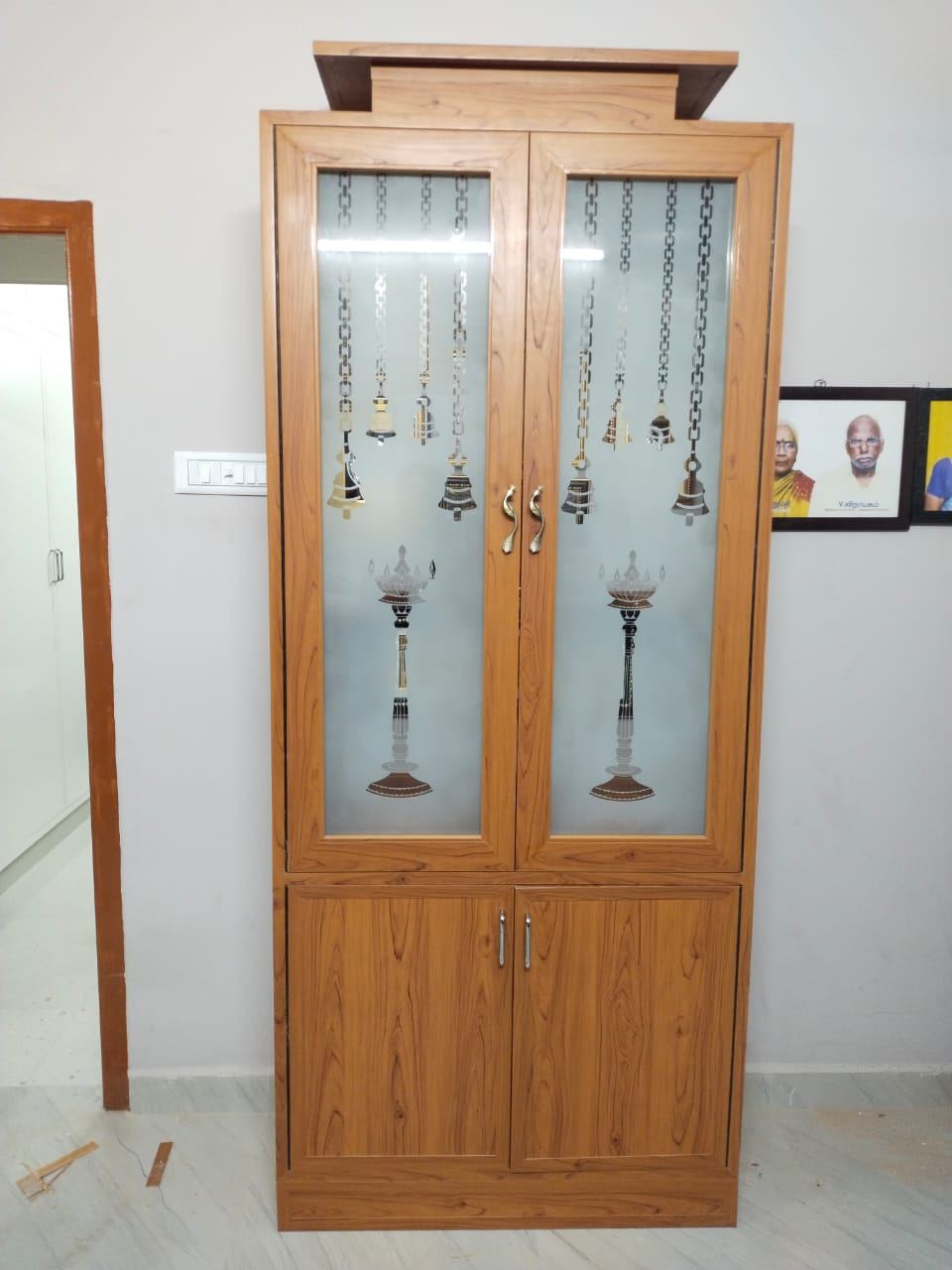
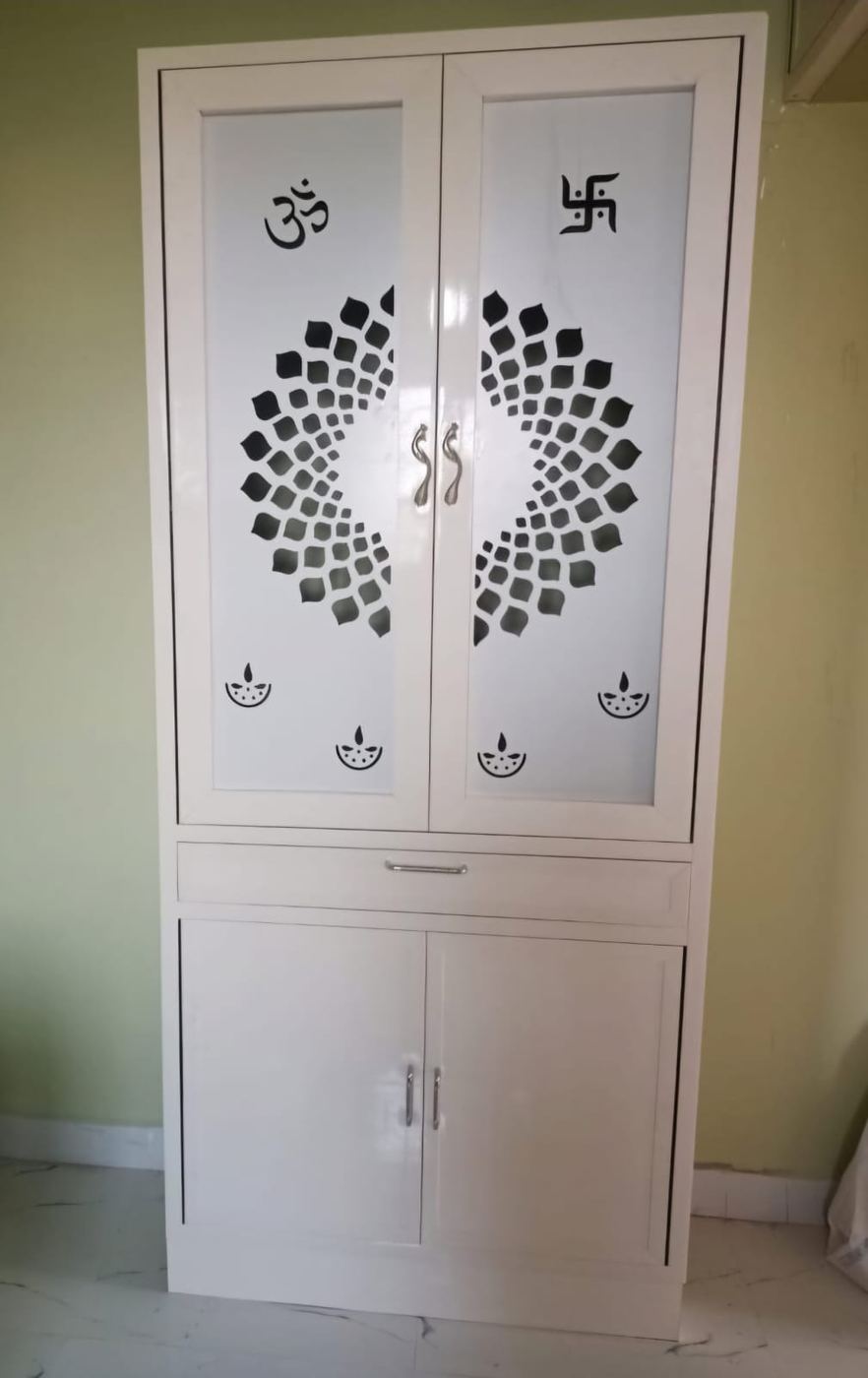
A pooja space used by multiple generations under one roof needs to accommodate different rituals, timings and storage needs at once.
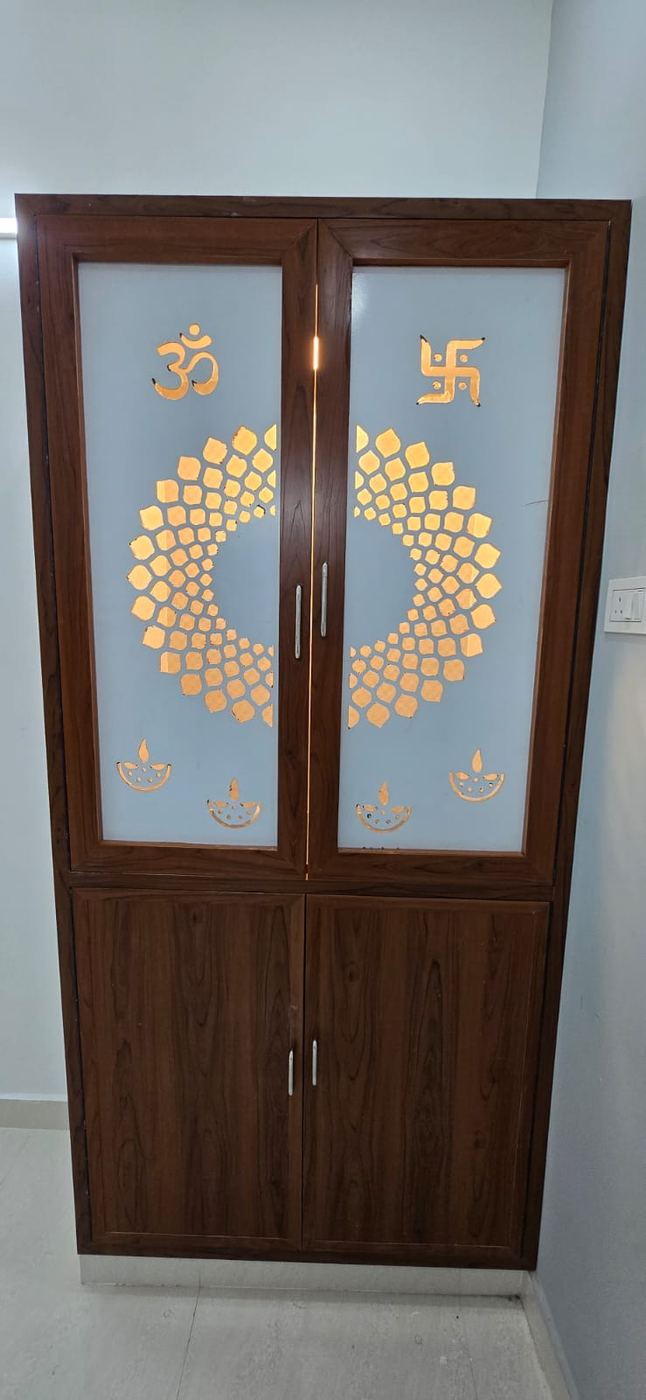
Key points
- Plan for enough idol and photo display space to accommodate preferences across generations without overcrowding.
- Separate storage sections for daily-use items versus festival-specific items keep the unit organised through the year.
- Seating space matters more in joint-family pooja rooms, where multiple people may pray together during festivals.
- Ventilation is especially important where incense and diya use is frequent throughout the day.
- A slightly larger unit than initially planned is usually worth it, since pooja room storage needs tend to grow over time.
Why this matters when you're planning pooja unit
At No More Wood, every pooja unit we design starts from this same material logic — daily diyas, incense smoke and water offerings take a visible toll on a pooja unit faster than almost any other furniture in the house — wood darkens, laminate lifts at the edges, and soot builds up in corners. We build the pooja unit to avoid that from day one, not patch it later.
Need this done right, not just explained?
Talk to our pooja unit designers — free site visit, no obligation.
Vastu & Pooja Room
No More Wood
Chennai